Subterranean and surface rodent exclusion targets the mechanical vectors through which commensal rodents breach buildings. In the Pacific Northwest, rodent pressure escalates dramatically during autumn rains when water…
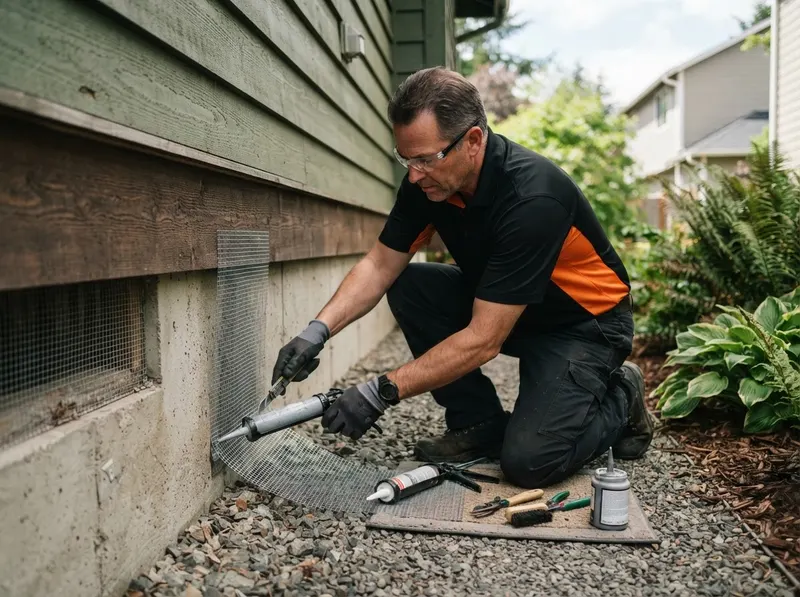
Subterranean and surface rodent exclusion targets the mechanical vectors through which commensal rodents breach buildings. In the Pacific Northwest, rodent pressure escalates dramatically during autumn rains when water tables rise across the Green River Basin. According to the Washington Department of Fish and Wildlife, native and non-native rodents seek dry, warm harborage adjacent to human structures as ambient temperatures decline. Unlike temporary baiting strategies that leave access paths open, physical exclusion alters the building envelope permanently. Rodents possess continuously growing incisors that exert gnawing pressure exceeding 7,000 pounds per square inch, capable of shearing through standard expansion foam, vinyl, and soft mortar. Effective surface exclusion relies instead on heavy-gauge stainless steel mesh, rigid metal flashing, and vulcanized sealants rated to withstand persistent rodent attack as outlined by the United States Environmental Protection Agency guidelines on Integrated Pest Management.
Subterranean exclusion specifically prevents burrowing underneath foundation footings and concrete slabs, a dominant habit of Norway rats. The process involves excavating an 8-to-12-inch trench around vulnerable perimeter sections, anchoring 1/4-inch 19-gauge galvanized steel mesh against the concrete foundation, bending the screen outward into an L-shaped subterranean apron, and backfilling with gravel and tamped soil. This mechanical apron forces burrowing rodents to hit an impenetrable barrier, deterring downward excavation toward sub-slab voids. Concurrently, surface exclusion addresses above-ground access points: pipe penetrations, crawlspace vent screens, sill plate junctions, and low roof-pitch overhangs. Standards established by the National Pest Management Association confirm that eliminating gaps larger than 1/4-inch halts adult mice, while gaps of 1/2-inch or greater easily permit Norway and roof rats to breach interior wall voids.
Selecting structural exclusion over recurring toxic bait stations provides long-term biological safety for children, non-target domestic pets, and native wildlife. Rodenticides present secondary poisoning risks to predatory raptors and local mammalian carnivores, a major public concern highlighted by the King County Department of Natural Resources and Parks. By installing non-chemical physical exclusions, homeowners resolve structural vulnerabilities without deploying dangerous anticoagulants within residential spaces. The practical trade-off is upfront labor investment versus indefinite chemical maintenance: trenching and sealing require meticulous exterior labor, yet it ends the recurring expense of monthly bait contracts and prevents the distinct biohazard of dead rodents decomposing inside inaccessible floor and wall assemblies.
Structural needs vary across Auburn microclimates and topographic elevations. Properties in the Stuck River Valley, Riverwalk, and North Auburn near the Green River deal with sandy, alluvial silt that facilitates rapid subterranean burrowing, requiring deeper perimeter trench depth. Older homes in the Terminal District and around the Game Farm Wilderness Park Area often exhibit weathered wood-to-foundation contacts and unshielded crawlspace access doors that demand custom sheet metal aprons. Conversely, hillside constructions across West Hill and Lea Hill, as well as multi-tier lots in Lakeland Hills, frequently feature stepped concrete stem walls and daylight basements where surface pipes, exterior heat pumps, and seismic weep holes serve as the primary entry highways. Guidance from the Public Health, Seattle & King County agency stresses that keeping basements and crawlspaces completely vermin-proof directly mitigates the accumulation of allergen-triggering dander, urine proteins, and pathogenic droppings inside domestic ventilation systems.
Every job gets a firm, written price after a free on-site visit.
For standards, safe disposal, and service guidance on PEST CONTROL SEVICE in Auburn, WA, useful references include U.S. EPA, ENERGY STAR, U.S. Dept. of Energy, Consumer.gov, U.S. Census Bureau, and Google Maps. General consumer and small-business resources are available from USA.gov, Better Business Bureau, FTC Consumer Advice, U.S. Small Business Administration, and Ready.gov.
Tell us about your subterranean and surface rodent exclusion job in Auburn and we'll send a clear, written quote, usually the same day.
 SilverNest Insect Control